
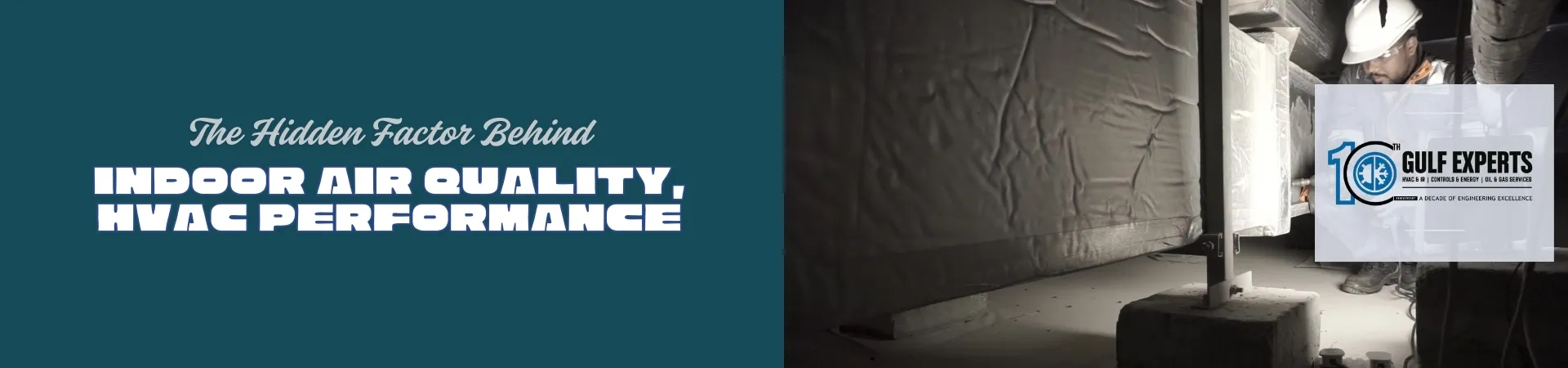
In industrial environments, air quality is more than a workplace comfort factor—it directly affects operational performance, employee well-being, and HVAC system reliability. Over time, airborne dust, process contaminants, and ventilation inefficiencies can build up inside duct networks, reducing airflow and increasing system strain.
That’s why duct cleaning is not simply a housekeeping task. It is a preventive HVAC strategy that helps industrial facilities maintain cleaner air, improve energy efficiency, and reduce the risk of costly mechanical failures.
Unlike commercial spaces, industrial ducts face a unique “cocktail” of contaminants. Without professional cleaning, you face:
When dust layers build up, the effective diameter of the duct decreases. This forces your fans to work at higher static pressures, leading to “system choking” and inconsistent cooling. 💡 Pro Tip: If your motors are overheating, check your duct cleanliness before looking at the Motor Rewinding options.
Dirty ducts recirculate heavy particles that clog your high-cost HEPA filters and foul your cooling coils, significantly increasing your Energy Consumption.
We don’t just “brush” the ducts. We use industrial-grade vacuums and HEPA-filtered extraction to ensure that 100% of particles—from fine process dust to microbial spores—are removed from your system.
🔗 Explore our professional Duct Cleaning process here.
Cleaning is only the first step. To ensure a truly high-performance environment, we integrate:
A clean duct system is the perfect foundation for Water and Air Balancing. Once the obstructions are gone, our engineers can fine-tune your VAVs and dampers to ensure perfect airflow distribution, backed by our HVAC Performance Testing reports.
Gulf Experts understands that industrial downtime is not an option. Our duct cleaning services are scheduled to minimize disruption, using non-invasive techniques that meet global health and safety standards.
Industrial Duct Cleaning is an investment in your facility’s “respiratory system.” By removing hidden contaminants, you reduce energy waste, protect expensive machinery, and—most importantly—ensure a safe environment for your people.
📲 Is your air quality affecting your production?
Chat with a Gulf Experts IAQ Specialist on WhatsApp or Book a Duct Inspection Today.
Most facilities schedule duct cleaning every 1–3 years, depending on dust levels, operating environment, and system usage.
Yes. Removing dust, debris, and contaminants reduces airborne particles and supports healthier indoor conditions.
Yes. Restricted airflow forces HVAC fans and motors to work harder, increasing energy use and operational costs.
Yes. Pressure testing confirms duct integrity and leakage control, ensuring clean air is delivered efficiently.
Thermal imaging helps locate hidden air leaks, moisture zones, and airflow abnormalities that may contribute to IAQ issues.