

Industrial motors are the backbone of many critical systems—from HVAC equipment and pumps to compressors and production lines. When a motor starts overheating, losing efficiency, or failing unexpectedly, many facilities face a key decision: repair, rewind, or replace?
A professional motor rewinding can restore motor performance, extend equipment life, and reduce costs—especially when handled correctly with proper testing and quality rewinding practices.
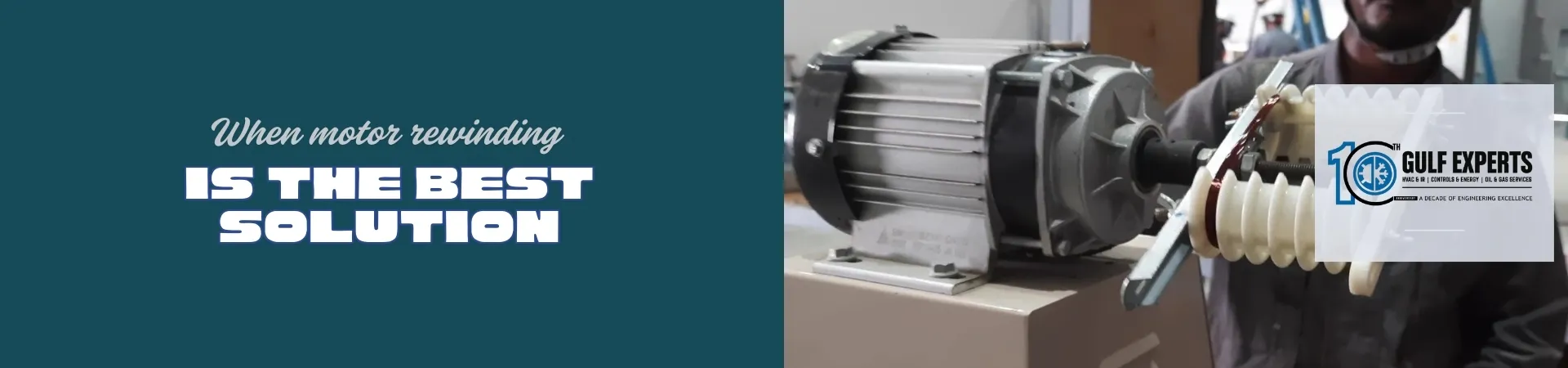
Motor rewinding is a specialized repair process that restores an electric motor’s performance by removing damaged windings and replacing them with new insulated copper windings. The goal is to bring the motor back to safe, stable operation while maintaining efficiency and reliability—especially in industrial environments where downtime must be minimized.
A professional motor rewinding service helps recover:
Industrial motor rewinding involves precise steps that require skilled technicians and advanced tools, including:
Rewinding is commonly applied to motors used in HVAC systems, pumps, compressors, and industrial machinery, where consistent performance is critical, and failures can lead to costly downtime.
Motor problems typically build up gradually before causing full failure. Watch for these warning signs:
Excessive heat can damage insulation and lead to winding failure—especially in heavy-load industrial environments.
If the motor frequently trips or causes breaker faults, internal insulation breakdown or winding imbalance may be the root cause.
Abnormal vibration can indicate misalignment, bearing wear, or rotor issues. In many cases, vibration analysis helps identify the problem early.
A failing motor may run inefficiently, consume more power, and reduce output performance—leading to higher operational costs over time.
Choosing rewinding or replacement depends on the motor’s condition, cost, and operational requirements.
Motor rewinding is often the best option when:
Replacement may be the smarter option when:
A professional inspection helps facilities avoid repeated repairs and unnecessary replacement costs.
Not all rewinding work delivers the same reliability. Low-quality rewinding can lead to early failure, overheating, and reduced motor efficiency.
A high-quality motor rewinding process includes:
For industrial operations, quality rewinding means fewer breakdowns and longer service life.
Electric motors are critical across multiple systems, and rewinding supports operational stability in many industrial applications:
Motors in AHUs and ventilation units require stable performance to maintain airflow and system efficiency. Poor motor performance often affects overall HVAC reliability.
Pumps depend on reliable motors for stable pressure and flow. Motor issues often result in poor water circulation and mechanical stress.
In compressors, motor issues can quickly lead to production downtime and safety risks. Motor rewinding is a cost-effective way to restore reliability—especially when paired with predictive testing and monitoring.
How Testing and Diagnostics Support Motor Rewinding Decisions
Before rewinding, industrial facilities benefit from diagnostic testing to confirm the root cause and prevent repeated failure.
Recommended supporting services include:
These checks help ensure the motor is restored properly and operates safely after service.
Gulf Experts provides reliable industrial repair and HVAC support solutions designed to reduce downtime and extend equipment lifespan. Our motor rewinding service is supported by:
Motor rewinding is a practical solution for restoring motor reliability, improving performance, and reducing replacement costs—especially in industrial environments where uptime is critical.
If your facility is experiencing overheating, frequent motor faults, or performance decline, professional motor rewinding can help restore stable operation and prevent costly breakdowns.
📲 Contact Gulf Experts on WhatsApp today to request motor rewinding service support.
Motor rewinding is the process of replacing damaged motor windings with new insulated copper windings to restore motor performance and reliability.
Common signs include overheating, burning smell, frequent tripping, abnormal vibration, and reduced motor performance.
Rewinding is often better when the motor structure is in good condition, and the failure is electrical. Replacement may be better for severely damaged or outdated motors.
Yes. Vibration analysis helps detect imbalance, misalignment, and bearing faults early—before they cause motor failure.
Turnaround time depends on motor size, damage level, and parts availability. Planned rewinding is usually faster than waiting for motor replacement lead times.